
TikTok social listening means collecting and analyzing public TikTok videos and comments to learn what shoppers say and do. Tools that read only captions and hashtags miss most of what a video shows. This guide covers what to track and a weekly workflow, plus the data limits.
- TikTok social listening works best when it reads the video, not only the caption. A caption and a hashtag show a sliver of what a clip contains.
- Plan each platform on its own, because TikTok, Reels, and YouTube reward different content.
- Platform rules cap what any tool can collect, so ask every vendor how it gets its data.
- Four short steps each week turn raw videos into decisions.
- Public data tells you what people post. It does not tell you what they buy.
Most brand teams know what shoppers write. Fewer know what shoppers show. TikTok social listening closes that gap by reading the videos and the comments under them, not just the words in the caption.
This guide is for consumer packaged goods (CPG) insights and brand marketing teams. It covers what TikTok social listening is, what to track on each video platform, which tools exist, a weekly workflow, and where the data runs out.
What is TikTok social listening?
TikTok social listening is the practice of collecting and analyzing public TikTok videos, comments, hashtags, and sounds to learn what people say about your brand, your category, and your rivals. Sprout Social frames it the same way, as a practice that covers posts, comments, hashtags, and trending sounds.
What is social media listening? Social media listening is the collection and analysis of public conversations on social platforms to find themes and shifts in opinion. Sprout Social describes it as a way to turn those conversations into better content and more revenue.
The word "listening" is a little misleading here. Much of what a shopper tells you is visual. They open the pack on camera, pour the drink, show the label, and react out loud. A person may never type your product name at all.
That is why social listening TikTok programs built on keyword alerts alone often feel thin, and why TikTok social listening has to include the footage. The signal is in the footage.
Why is social listening important for CPG brands?
Social listening is important for CPG brands because it shows how shoppers use products and talk about them without waiting for a survey or a sales report. TikTok social listening in particular gives insights and marketing teams a current source of unprompted consumer evidence.
Reach is part of the case. Pew Research Center's 2026 fact sheet found that 84% of U.S. adults say they use YouTube. Instagram follows at 51%, and TikTok at 31%, based on a survey fielded from January 30 to June 18, 2026.
Speed is the other part. A Convosight case study describes a US beverage manufacturer that wanted to know how people tie sparkling drinks to cultural moments. The work covered 6000+ videos across TikTok, Instagram, and YouTube, and the page says the dashboard took a two-day window to build. "Dirty sodas" surfaced as a fast-growing trend.
Listening does not replace research. It points research at the right questions sooner.
What is the difference between social listening and social monitoring?
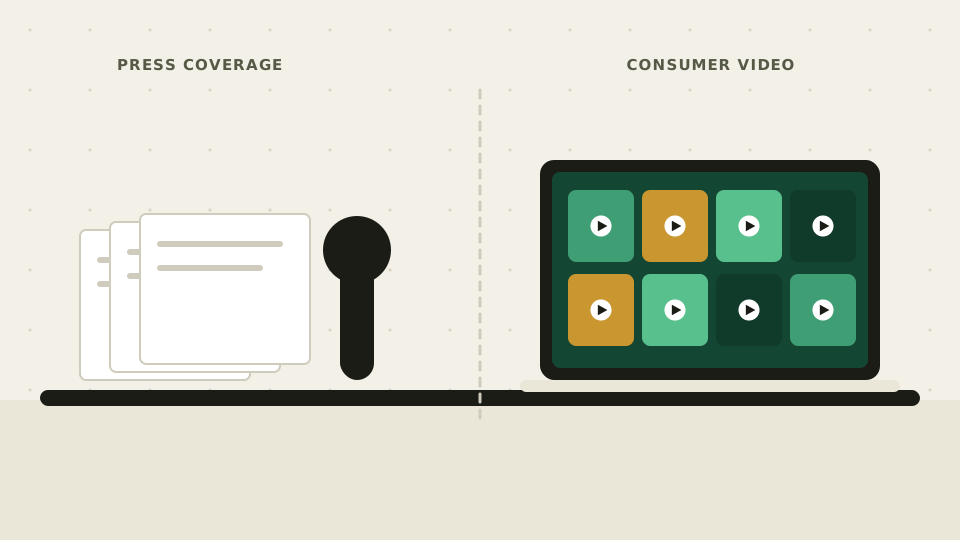
Social monitoring tracks mentions as they happen and answers "what is being said right now." Social listening analyzes conversations over time to explain why people say it and what to do about it. Monitoring is about response. Listening is about understanding.
Sprout Social draws the line the same way: monitoring tells you what is trending, and listening tells you why. Most CPG teams need both.
A quick test helps. Tracking TikTok mentions by the hour is monitoring, while TikTok social listening asks what the videos mean. If your question starts with "did anyone mention us," you are monitoring. If it starts with "why are people switching," you are listening.
A Convosight crisis-response case study shows both in one project.
A frozen dessert maker faced a reputation scare after a viral Instagram reel. The team tracked engagement hourly, which is monitoring. It also split sentiment by aspect and grouped commenters by follower count, which is listening. The page reports 12M+ impressions and says influencers with 250K+ followers amplified negative sentiment.
What gets lost when a tool reads only captions and hashtags?
A tool that reads only captions and hashtags misses what a video shows on screen, how the product is used, what the packaging looks like, and much of what viewers say in the comments. Those four gaps matter most for CPG, where use and packaging drive purchase.
Check any vendor's help pages for where the line sits. Sprinklr's TikTok documentation says its hashtag listening includes video captions only and excludes private content. It also says hashtag listening retrieves only the top 1,000 posts by likes within a rolling 90-day window. That is a documented design choice, and text-based collection tends to share it.
Here is what slips through.
- What is shown on screen. A creator never says the brand, but the can is in the shot. A text-only tool sees nothing.
- How the product is used. Pouring soda over ice cream or freezing a yogurt tube is a use case. Captions rarely describe it.
- Packaging. Shoppers cut open boxes and complain about a lid on camera. That is packaging feedback you can act on.
- Comments. Viewers add the reaction and the question. Sprinklr states that hashtag listening on TikTok does not cover comments, and a comment thread can show buying intent.
Illustration, not a client result: picture a video captioned "friday treat" with no brand tag.
On screen, a creator pours a sparkling drink over vanilla ice cream and holds the can to the camera. "Too sweet but I love it," she says. Commenters ask where to buy it. A caption reader logs nothing. A video reader logs the product, the use, the pack, and the questions.
Some TikTok social listening tools now read video. Syncly's site describes speech-to-text and AI vision for TikTok, Reels, and Shorts. Convosight is another, covered below. For the method in depth, see our guide to AI video analysis.
What should CPG brands track on TikTok?
CPG brands should track four things in TikTok social listening: how people use the product, the recipes and hacks built around it, the creators and comment themes that shape opinion, and the sounds and formats that carry trends. Break each down by aspect, such as taste and price, so one angry video does not read as a trend.
Use and occasion. When do people drink, eat, or apply it? Morning, post-gym, game day, or a late-night snack? Occasions feed claims, flavors, and pack sizes.
Recipes and hacks. Shoppers invent uses your team never planned. In the beverage case study, the page says TikTok led in creative recipe content, at 16.3% of conversations, and that blackberry and orange cream flavors made up 9.7% of TikTok mentions. Those are figures from one client project, not a benchmark.
Creators and comments. Note which creators repeat across your category and what their audiences ask. A repeated question is a gap in your pack or your shelf.
Sounds and formats. A trending sound or a format such as a taste test is a cheap read on what will travel next. Log it, then check again in a week.
Track competitors the same way. Category-level TikTok social listening is where white space shows up, and our guide to consumer insights explains how to move from raw posts to a finding.
Can you do Instagram social listening?
Yes, but Instagram social listening is more tightly gated than TikTok social listening. Meta's public hashtag search lets an approved app query 30 unique hashtags per rolling seven days. Tools reach public posts and Reels only through matched hashtags, so what a Reel shows on screen is invisible to those queries.
The details come from Meta. Meta's hashtag search page says you can query a maximum of 30 unique hashtags in a rolling seven-day period. An app also needs App Review approval for the Instagram Public Content Access feature and the instagram_basic permission. Hashtags on Stories are not supported, and the media_url field is omitted for video with copyrighted or licensed audio.
Sprinklr's Instagram help page says listening there is restricted to hashtags, and that Meta imposes the limit, so other tools face it too. Whether you search "instagram social listening" or "social listening instagram," you are asking the same thing: what do people post about my category, and what do they show?
On Reels, track creator format, such as unboxing or taste test. Track where the product sits in the frame and how it is held or poured. Read the on-screen text and audio, which often carry the message when the caption is bare. And read the comments, where the question or complaint lives.
Meta Content Library is another source. Its page says it is open to applicants affiliated with not-for-profit organizations doing scientific or public-interest research. It is a research tool, so a brand team should not build a listening program on it.
Can you do YouTube social listening?
Yes. YouTube social listening is workable because YouTube publishes an official API, but that API has a daily quota and developer policies that limit how long data may be kept. Long reviews and comment threads matter most for CPG.
The quota is public. Google's quota page says projects get 10,000 units per day for most endpoints, while search.list has its own bucket of 100 calls per day. Reading comment threads costs 1 unit per call.
Storage rules matter too. The YouTube API Services Developer Policies say temporarily stored non-authorized data may be kept no longer than 30 calendar days, after which it must be deleted or refreshed. The same policies bar clients from scraping YouTube applications.
Vendors work inside these limits. Sprinklr's YouTube help page lists 15 keywords per active YouTube account and seven days of backfill for keyword listening. For verified channels or videos, it fetches comments and replies going forward.
On YouTube, track long reviews and comparisons, where creators explain why they chose one product over another. Track Shorts, which behave like TikTok and Reels. Read the comment threads on competitor videos for unmet needs.
YouTube also has the widest use of the three in Pew's data. A TikTok social listening program that stops at TikTok leaves a hole.
What are the best TikTok social listening tools?
There is no single best tool. The right one depends on your job: reading video for consumer insights, running a social inbox, tracking press coverage, or studying your own channel. Here are the options, with what each vendor says about itself on its own page.
| Tool | Built for | Source |
|---|---|---|
| Sprout Social | Social teams; its TikTok listening guide covers posts, comments, hashtags, and sounds | Sprout Social |
| Sprinklr Insights | Consumer, competitor, and market intelligence across 30+ channels | Sprinklr |
| Syncly | Brand conversations on TikTok, Reels, and Shorts, with video analysis | Syncly |
| Muck Rack | PR and communications: news, social, and AI answers about a brand | Muck Rack |
| YouTube Studio | Analytics on your own channel, such as retention and audience | YouTube Help |
| Meta Content Library | Approved research on public Instagram content | Meta |
| Convosight | Reading social video and comments for CPG insights and brand marketing | Convosight |
A few notes on fit. Sprinklr suits large teams that want one system across many sources. Native tools like YouTube Studio are exact for your own channel but say nothing about your category.
Convosight reads TikTok, Instagram, and YouTube video with comments. Its homepage describes Aria, a question-and-answer tool that pulls insights from social video, and Persona, which builds "consumer twins" from social conversations. By Convosight's own figures, it has analyzed 500M+ videos and 2B+ conversations. It fits CPG insights teams that need to see how products are used, and brand teams that vet creators or track campaigns.
It is the wrong choice for pure press and media monitoring. Convosight's public site describes social video and comments, not news coverage or journalist outreach. If that is your main job, a PR platform such as Muck Rack describes itself that way, and our post on Meltwater alternatives compares that group.
Whatever TikTok social listening tool you pick, ask how it collects data and what it cannot see. The platform documentation above is the honest ceiling for every vendor.
What does a weekly social listening workflow look like for a CPG team?
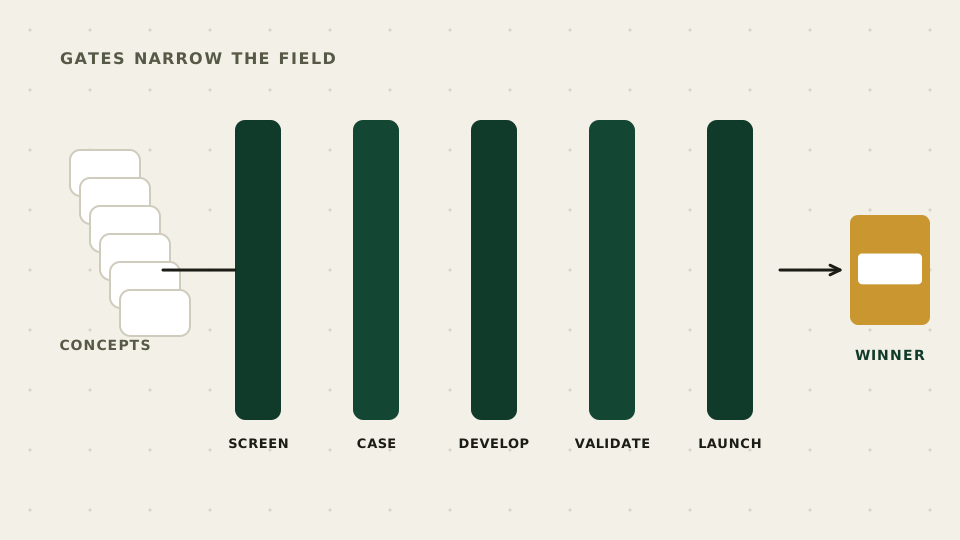
A weekly TikTok social listening workflow has four steps: set two or three questions, collect a fixed sample of videos, read and tag them, and share a one-page readout with a decision. Once the setup is done, it takes a small team a few hours.
- Monday: set the questions. Pick two or three, such as "How are people using our new flavor?" or "What do shoppers ask under competitor videos?" Write them down so the week has a point.
- Tuesday: collect the sample. Reuse the same search terms and competitor list each week so changes mean something. Keep the video and its comments together.
- Wednesday: read and tag. Tag each video by use, occasion, packaging, sentiment, and creator type. A video-reading tool speeds this up, but someone on your team should still watch a handful by eye.
- Thursday: write the readout. One page: what changed, the best clips, and one decision or test. Insights shares it with R&D and innovation. Brand marketing picks creators or content to act on.
Keep a running log of tags. After a month, you can see which uses are growing and which were one-off spikes. If a spike hits mid-week, switch from listening to monitoring: check volume by the hour, find the source video, and read the comments before replying.
What can social listening not tell you?
TikTok social listening cannot show private posts or sales, and it cannot explain why a person did or did not buy. It also cannot collect more than a platform allows. Public data tells you what people post and say. It is not a market-size number.
Platform access is gated. The Instagram hashtag cap and the YouTube quota above come from Meta and Google. Sprinklr's own pages say TikTok hashtag listening has no historical backfill and excludes private content. For TikTok, the developer site lists research tools for approved researchers. Eligibility rules change, so check current terms before you plan around any TikTok data source.
Rules change. Ask your vendor how it collects data and what happens when a rule changes. That applies to Convosight too, since its public site does not describe collection methods. Ask in the demo.
Posters are not buyers. Pew's numbers show 31% of U.S. adults say they use TikTok, so most do not. Treat TikTok social listening as a source of hypotheses and consumer language, then check big calls against survey or sales data.
Sentiment is approximate. Sarcasm and in-jokes trip up automated scores. Read a sample of clips yourself before acting on one.
Demographics are inferred. Public profiles rarely state age or gender, so any audience breakdown is an estimate. Word the finding that way.
None of this makes listening weak. It makes the claims you attach to it more honest.
Convosight is trusted by Unilever, Abbott, Kenvue, Pepsi, SC Johnson, and Kimberly-Clark. If you want to see video listening run on your own categories, Book a demo.
FAQ
What is TikTok social listening?
TikTok social listening is collecting and analyzing public TikTok videos, comments, hashtags, and sounds to learn what people say about a brand or category. For CPG teams, the useful part is video: how products are used, shown, and discussed, which captions alone rarely capture.
What is the difference between social listening and social monitoring?
Monitoring tracks mentions in real time and answers what is being said. Listening analyzes those conversations over time to explain why. Monitoring suits fast response, and listening suits product and creator strategy. Most brands run both.
Why is social listening important?
TikTok social listening gives brands a current, unprompted view of how people use and describe products, before surveys or sales data show the shift. It helps insights teams spot needs and trends, and helps marketing teams pick creators and content with evidence instead of guesses.
Can you do social listening on Instagram?
Yes, within limits. Meta's hashtag search allows 30 unique hashtags per rolling seven days and requires App Review. Tools reach public posts and Reels only through matched hashtags, so comments and on-screen content need a tool that reads video directly.
Can you do social listening on YouTube?
Yes. YouTube social listening runs on an official Data API with a daily quota, and its developer policies limit how long stored data can be kept and bar scraping. Teams usually track long reviews and comment threads, plus those on competitor videos.
What should CPG brands track on TikTok?
Track how people use your product and when, the recipes and hacks built around it, the creators and comment questions that shape opinion, and the sounds and formats that carry trends. Break each down by aspect, such as taste and price, and compare against competitors.