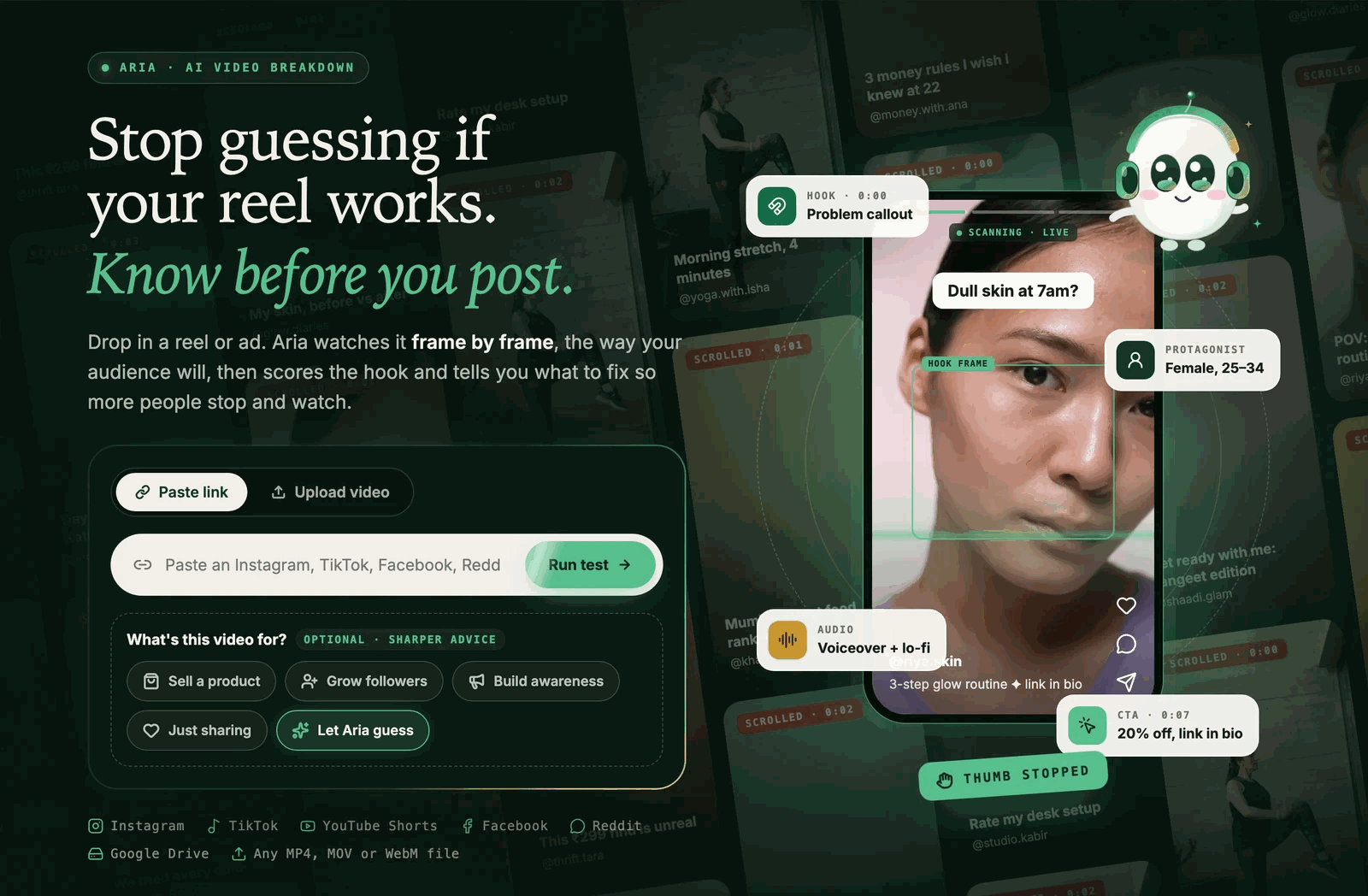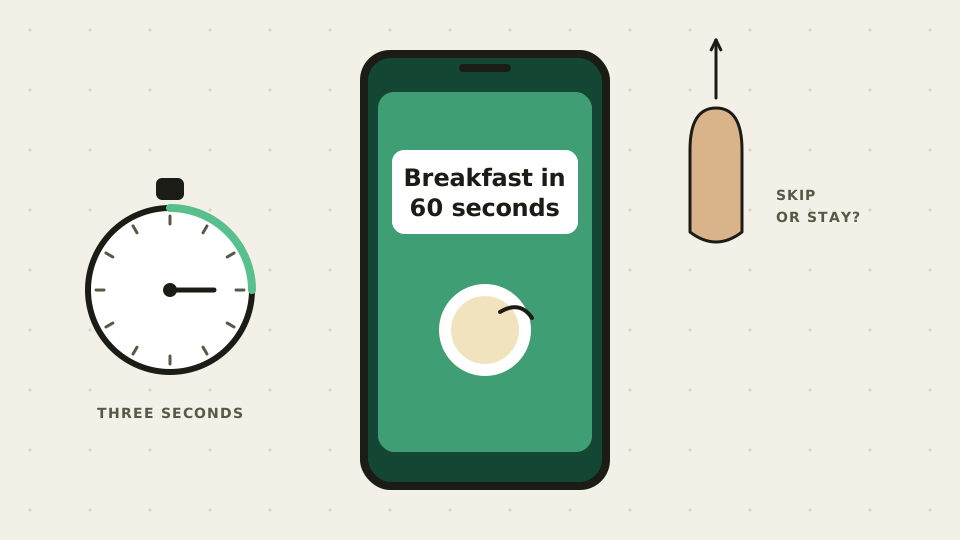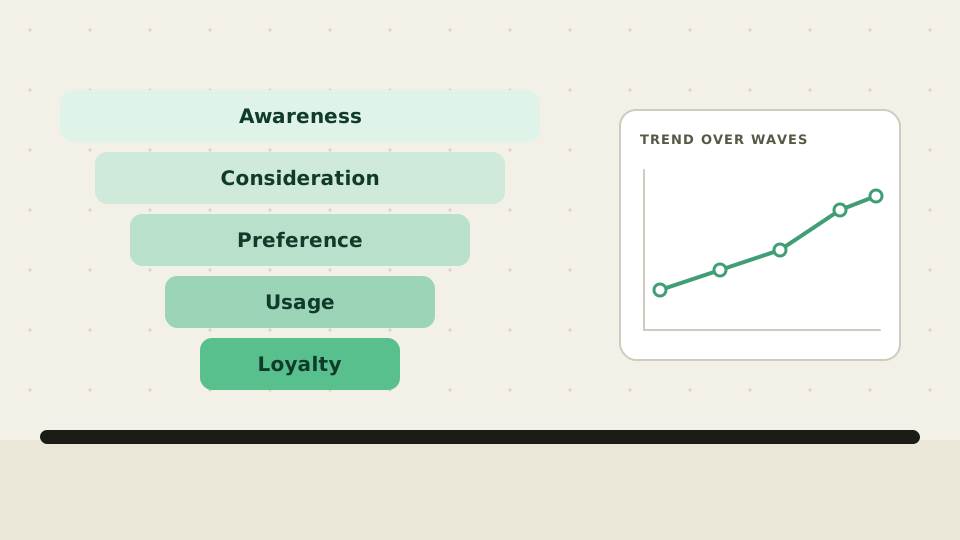

A YouTube video analyzer usually does one of two jobs. It summarizes a single video, or it reports on your own channel. CPG brands often need a third job: reading many creator videos and their comments to learn what shoppers think. Free tools cover the first two. Aria, Convosight's insights assistant, is built for the third.
- A YouTube video analyzer is usually a one-video summarizer or a report on your own channel, and a free tool is enough for either.
- For a brand, analyzing YouTube means reading a whole category: the reviews, the tutorials, and the comments under them.
- If you build your own YouTube video analyzer, the Data API has a daily quota, and its policies limit how long you may store some data.
- Aria reads social video and comments, including YouTube, and Persona tests a claim or concept against an insight.
Search for a YouTube video analyzer and you will mostly find tools that summarize one video. That is a fair use for a YouTube video analyzer. But YouTube is also where shoppers explain products at length: 84% of U.S. adults say they ever use it, and 95% of adults ages 18 to 29 do, per Pew Research Center's 2026 survey.
This guide answers the one-video question first. Then it widens the question to what a CPG insights or brand team needs, and shows where Aria and Persona fit.
What is a YouTube video analyzer?
A YouTube video analyzer is a tool that takes a YouTube video and returns something you can use, such as a summary, a transcript, key moments, or performance scores, and most versions work on one video at a time, either to explain what it says or to show how it performed.
The first job is understanding what a video says. Summarizers, transcript tools, and any YouTube video analyzer AI assistant read a public video and give you its main points. The second job is performance, which creator tools measure with titles, thumbnails, and retention.
Google's Gemini docs show the limits of the AI route. Its YouTube URL feature takes public videos only, is in preview, caps free users at 8 hours of YouTube video per day, and samples 1 frame per second by default (Google AI Studio docs). Our guide to the AI video analyzer compares the approaches.
What do YouTube's own analytics show?
YouTube Studio is the free, official YouTube video analyzer for your own channel, with reports on reach, engagement, audience, and revenue for Partner Program members, plus a Trends tab for content ideas, so it answers how your own videos are performing with viewers.
YouTube Help lists impressions, click-through rate, views, watch time, average view duration, and the share of new, casual, and regular viewers. It also warns that some data, such as traffic sources, may be limited. A video-level retention report shows where viewers stayed and where they left.
For a CPG brand with its own channel, that is the right tool for a launch film or a how-to video. It says nothing about the dozens of creator videos about your category that you do not own.
What does a YouTube video analyzer need to do for a CPG brand?
For a CPG brand, analyzing YouTube means treating reviews, unboxings, tutorials, and creator videos, plus the comments under them, as consumer evidence, where the unit of analysis is the category rather than the clip, so you learn what many creators show, say, and argue about.
One review is one opinion. The creator may have been gifted the product, and the comments may disagree with every word. Three hundred reviews with their threads show which claims people repeat, which worries keep returning, and which rivals they compare you to.
There is a bias to respect. Creators are not average shoppers, and commenters are the people with something to say. Any YouTube video analyzer output sits beside other evidence, not above it. The consumer insights guide covers how those sources fit together.
What should a YouTube video analyzer read in a review video?
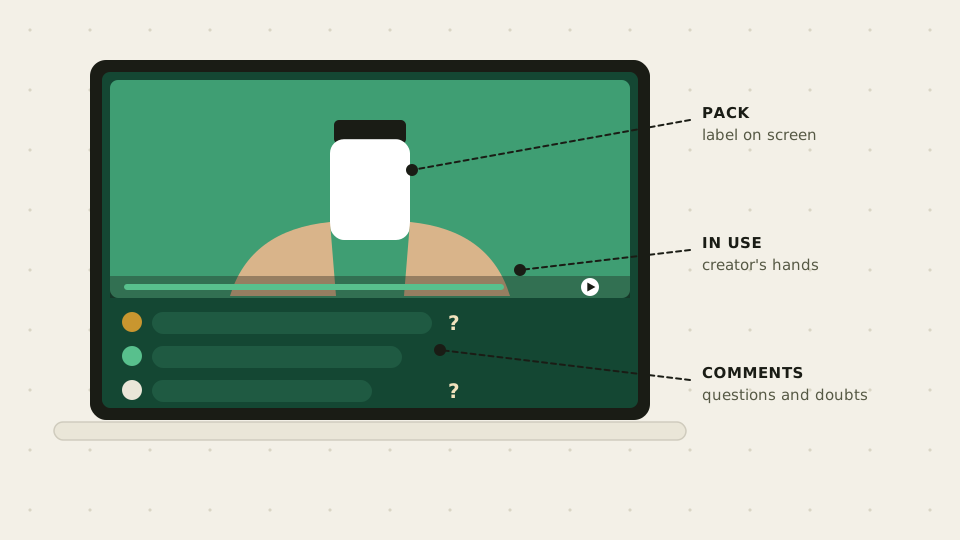
Read five things in a review video: what is shown on screen, how the product is used, what the creator says against what the video shows, which claims get repeated, and what the comments argue about, a method you can apply by hand to any small set.
- What is shown. Look at the pack, the label, the size next to a hand, and the result. People show things they would never describe.
- How it is used. Note how much, how often, with what else, and where it goes wrong. A spill, a stiff cap, or a skipped step is a finding.
- Said against shown. A creator may call a product gentle while the demo shows redness. The gap is worth more than either half.
- Repeated claims. Count which pack claims the creator reads aloud or viewers quote back. Repeated words are the language shoppers have adopted.
- What the comments argue about. Price, ingredients, "does it work for my type," and the alternative someone names in reply.
Note disclosure too: a gifted or sponsored tag changes the weight of a glowing review.
Illustration, not a client result: a reviewer praises a fragrance-free lotion, the pump jams in the demo, and the top replies argue over whether "unscented" and "fragrance-free" mean the same thing. That is three findings from one video. A team would want to know whether the pattern holds across fifty.
Can you build your own YouTube video analyzer data collection?
Yes, within limits: the YouTube Data API lets approved projects pull video details and comment threads under a daily quota, while YouTube's developer policies cap how long you may store data you did not receive through a user's authorization and prohibit scraping by API clients.
What is the YouTube Data API? It is YouTube's official programming interface. Its commentThreads.list method returns comment threads for a video or channel, up to 100 per call.
Google's documentation gives each project 10,000 units a day by default for most endpoints, with search.list and video uploads limited to 100 calls a day each. The default is subject to change, and a quota extension form exists. A commentThreads.list call costs 1 unit and returns 1 to 100 threads.
Finding videos and reading replies draw on the same budget as reading comments. Videos with comments turned off return a 403 error.
The developer policies matter more than quota. Other authorized data may be stored no longer than 30 calendar days, and non-authorized data may be stored temporarily, not beyond 30 days. The API Services Terms add that YouTube may audit your use and set quota at any time. This is a summary, not legal advice, so have counsel read the policies before you build a long-running archive.
What can Aria do with YouTube video?
Aria is Convosight's AI insights assistant, which Convosight says answers questions about consumers from social video, and YouTube is one of the 9+ channels it reads, with comments, alongside Instagram, TikTok, Reddit, Facebook, and X, so you can ask in plain language or pick a preset job.
Everything below is Convosight's own description of Aria across its channels, not a YouTube-only feature.
- Preset jobs. Six are listed: Consumer Understanding, Category Understanding, New Product Development, Content Strategy, Influencer Discovery, and Brand and Competitor Sentiment.
- Signals sorted four ways. What people said, showed, felt, and left unsaid. The unsaid column matters in review video, where the demo often contradicts the voice-over.
- Receipts. Claims are described as re-verified claim by claim, with the clips and conversations behind each answer, from posts and comments. Metrics include views, likes, comments, and engagement.
- Insight snapshots. Top themes, emotions, voice-of-the-consumer quotes, and emerging needs, each tied to its conversations.
- A live feed and alerts. The site shows a live feed of category videos and a ticker with examples such as "Label anxiety · detected" and "Price objection · spiking." A Summarise function offers filters for each team.
- Aria MCP. Convosight's MCP support page says Aria can be connected to the AI assistants and tools you already use, and names Claude, VS Code, Cursor, and other MCP-compatible clients.
Convosight built Aria for Brand, Social, and Digital teams, and for Insights, CMI, R&D, and Innovation teams. Its own figures are 500M+ videos watched and analyzed, 2B+ conversations analyzed, and 120+ languages. Its homepage demo, the site's own example and not a client result, asks "Where's the whitespace in baby care?" and answers from 3,120 unprompted videos.
How does Persona test a YouTube insight?
Persona is the feature that sits on top of Aria: Convosight says it builds evidence-grounded consumer twins from social conversations, so a team can take an insight from Aria, put claims or concepts in front of a twin, and pressure-test them before launch.
The site calls the pairing "an always-on insights panel." The flow starts with "Take insight to Persona." You place concepts on the table, and the demo uses pack claims such as "No hidden nasties" and "Clinically gentle, dermatologist approved." You ask follow-up questions and get a verdict from the persona's cohort, plus Top Use Cases. Results can be shared as a PPT, PDF, or chat message.
Take the lotion illustration. If comment threads show people arguing over "fragrance-free" and "unscented," a team could carry that insight into Persona and compare the two wordings. That is a first read on which claim holds up, before you spend on a study. See product concept testing for where that step sits.
Convosight says twins use "zero synthetic data, zero paid panels," are built from real people who were not prompted, and are refreshed weekly. Those are its own claims.
When is a free YouTube video analyzer enough?
A free YouTube video analyzer is enough when your question concerns one video or your own channel, such as summarizing a competitor's launch film, pulling a transcript, or reading your retention curve in YouTube Studio, and you need more only when the question spans many videos and comments.
Here is a simple test. If you could watch every video in an afternoon, do that, and use a free summarizer to speed up notes. If you would read hundreds of videos across a category, and want each finding tied to the clip behind it, a YouTube video analyzer built for one clip will not hold up.
Free tools also leave work on your side. You collect the videos, keep the answers, and apply the same definitions to the first video and the three-hundredth. The longer guide to AI video analysis shows what each layer of a video can and cannot reveal.
What are the limits of Aria and Persona?
Aria and Persona read public video and public comments, so they see what people choose to post and say, and they miss private opinions, shoppers who never comment, and in-store behavior, which is why their output belongs beside surveys, sales data, and in-market tests.
Convosight does not publish accuracy or validation figures for Aria or Persona on the pages we reviewed, so we make no claim about either. A twin is a first read, not a forecast. A theme seen in video may be loud but small, and sales data is how you find out.
There is a plain case for skipping them too. If you have one video, one channel, or a short list of reviews you can watch yourself, you do not need a platform.
Where to go next
To see how Aria reads YouTube and other social video with comments, as a category-level step beyond a one-video YouTube video analyzer, and how Persona tests what it finds, Book a demo. Convosight is trusted by Unilever, Abbott, Kenvue, Pepsi, SC Johnson, and Kimberly-Clark.
FAQ
What is a YouTube video analyzer?
A YouTube video analyzer is a tool that takes a video and returns a summary, a transcript, key moments, or performance scores. Some report on your own channel. For brands, the wider question is what a whole category of videos and comments says about shoppers.
Can AI analyze a YouTube video?
Yes. Google's Gemini docs say its YouTube URL feature, in preview, accepts public videos only, not private or unlisted ones. It samples 1 frame per second by default and caps free users at 8 hours of YouTube video per day. That suits one video, not a category.
Is there a free YouTube video analyzer?
Yes. YouTube Studio is free and shows reach, engagement, and audience for your own channel. Many free summarizer and transcript tools handle a single public video. Both fit one video or your own channel, but neither reads a whole category of creator videos and comments.
How do you analyze YouTube comments?
By hand, read the top comments and replies, and group them by theme: price, ingredients, results, and alternatives. With code, the Data API's commentThreads.list method returns up to 100 threads per call at 1 quota unit. Comments can be disabled on some videos.
Can brands collect YouTube data for research?
Brands can use the YouTube Data API within its quota, which is 10,000 units a day by default for most endpoints. YouTube's developer policies cap storage of non-authorized data at 30 calendar days and bar scraping by API clients. Have counsel read them before you build.
What can Aria do with YouTube video?
Convosight says Aria answers consumer questions from social video, with YouTube among its 9+ channels. It sorts signals into said, shown, felt, and unsaid, attaches the clips and comments behind each answer, and offers preset jobs, a live feed, and Summarise.
What is Persona?
Persona is the feature on top of Aria. Convosight says it builds evidence-grounded consumer twins from social conversations, so teams can take an Aria insight, test claims or concepts, ask follow-ups, and share a verdict. It sits beside surveys and sales data, not in place of them.